Art as Healing: Creative Activities That Calm and Inspire Memory Care Residents
Art serves as a healing tool for memory care residents, calming minds and inspiring spirits. Engaging in painting, drawing, and crafting opens doors to creativity and connection. These activities boost emotional well-being and stimulate cognitive function, fostering cherished memories and shared experiences. Incorporating music and storytelling enhances joy and promotes social interaction, while group art projects create a sense of community. Discover how these creative pursuits can transform lives as you explore further.
Key Takeaways
- Engaging in painting and drawing allows residents to explore emotions and memories through colors and shapes, enhancing emotional well-being.
- Crafting activities promote hands-on engagement, fostering pride and self-esteem while stimulating creativity and collaboration among residents.
- Music and movement activities evoke familiar tunes, encouraging joyful interaction and physical movement that lift spirits and enhance cognitive function.
- Storytelling and group art projects provide a safe space for residents to express themselves, fostering a sense of identity and community.
- The focus on the creative process over the outcome helps residents enjoy the moment, reducing anxiety and feelings of isolation.
The Therapeutic Benefits of Art for Memory Care Residents
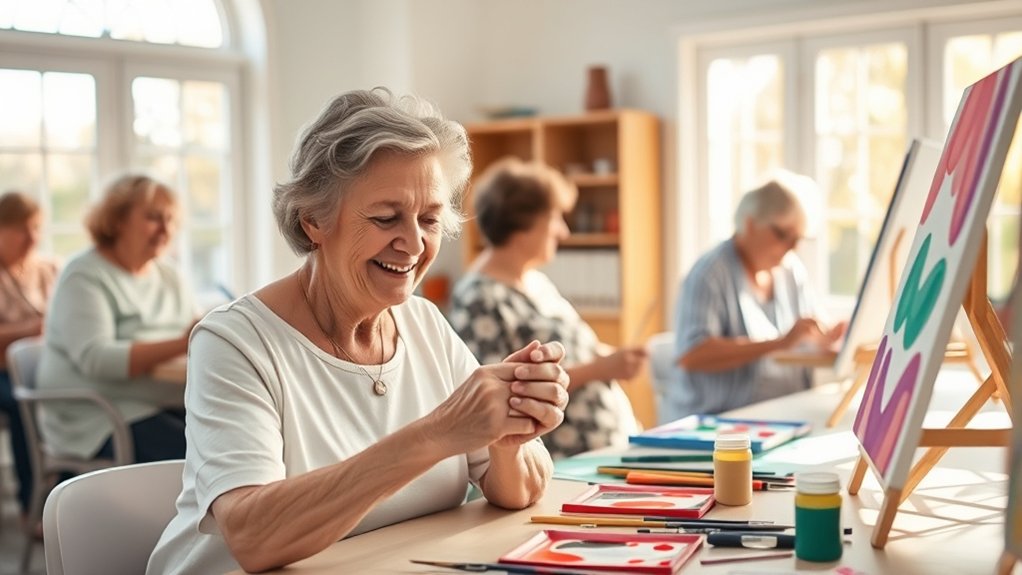
Art can serve as a powerful tool for memory care residents, enhancing their emotional well-being and cognitive function. Engaging in creative activities helps you foster connections, evoking cherished memories and feelings.
When you encourage residents to express themselves through art, you’re not just promoting creativity; you’re also providing a means to communicate emotions that words may not capture. This engagement can reduce feelings of isolation and anxiety, offering a sense of purpose and accomplishment.
Additionally, art stimulates cognitive abilities, enhancing focus and memory recall. By facilitating these artistic experiences, you’re contributing to a supportive environment where residents feel valued, understood, and empowered. Moreover, engaging in art activities can significantly boost emotional well-being, helping residents experience joy and a renewed sense of purpose.
Ultimately, art becomes a bridge to enriching their lives and promoting healing through creativity.
Painting and Drawing: Unlocking Creativity
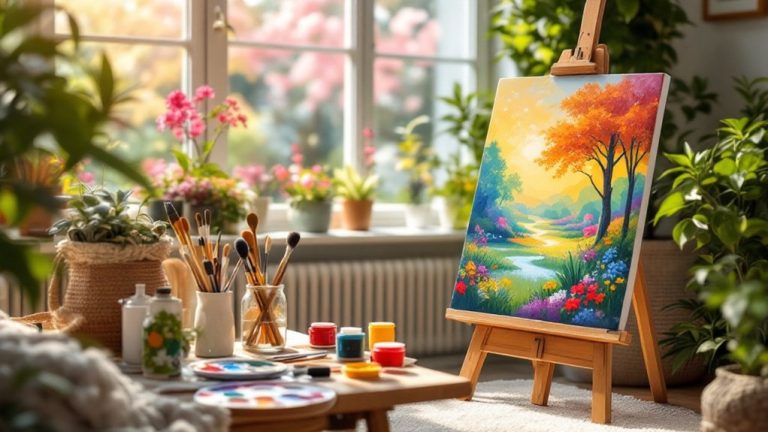
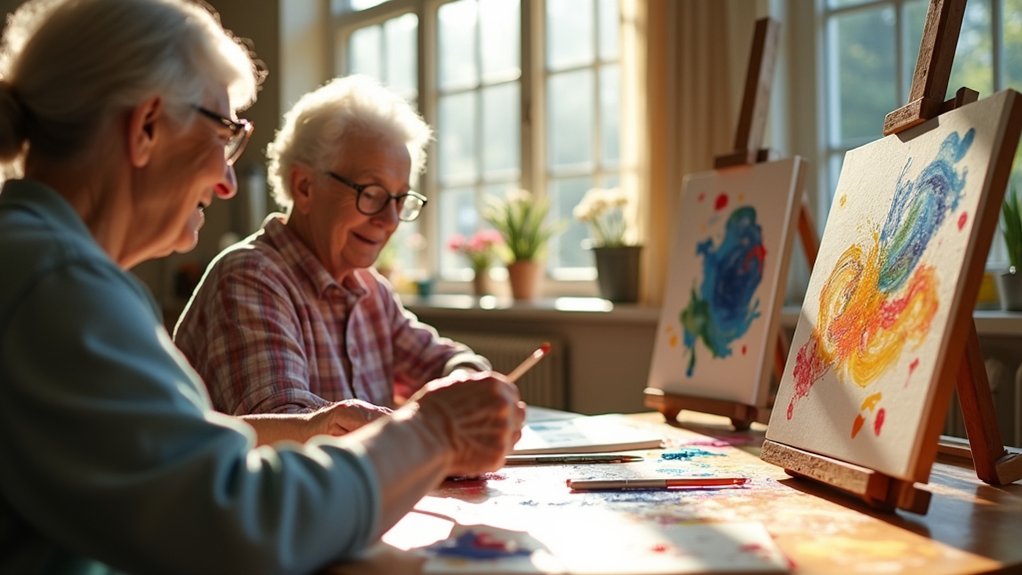
While many residents may feel hesitant at first, painting and drawing can open up a world of creativity and self-expression. These activities invite you to explore colors, shapes, and emotions without the pressure of perfection.
You might find that a simple brushstroke or doodle can evoke cherished memories and feelings, making it a powerful tool for connection. Encourage residents to focus on the process rather than the outcome; it’s about enjoying the moment and expressing what’s inside.
As you guide them, celebrate their unique perspectives and offer gentle encouragement. By providing an environment filled with art supplies and support, you can help unleash their creativity, fostering joy and a sense of accomplishment that enriches their daily lives. Additionally, engaging in arts and crafts enhances fine motor skills and promotes cognitive connections, which are essential for emotional well-being.
Crafting: Hands-On Activities for Connection
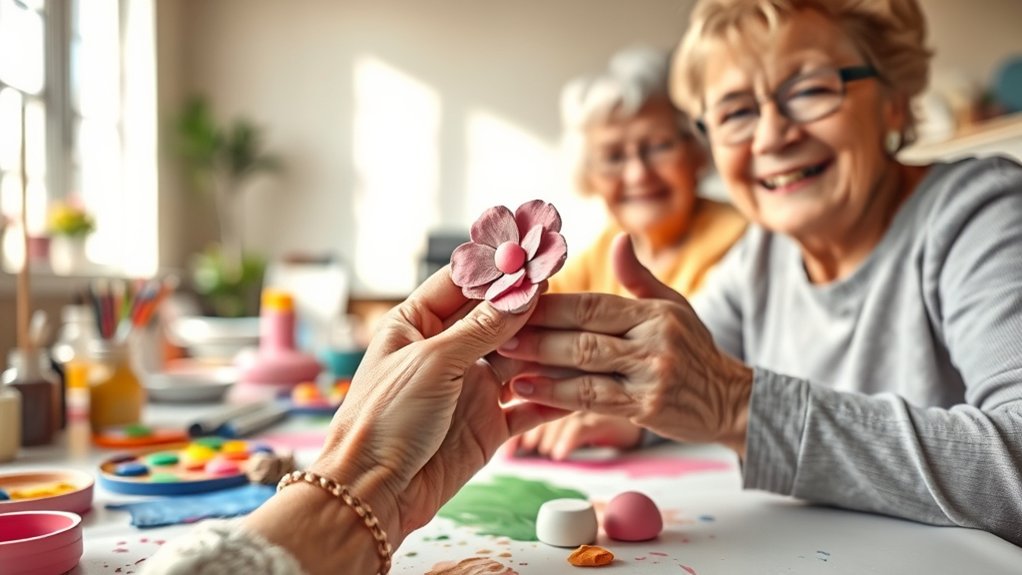
Crafting offers a wonderful opportunity for connection, as it engages residents in hands-on activities that stimulate both the mind and the spirit.
When you guide them through projects like weaving, scrapbooking, or making simple jewelry, you foster meaningful interactions and shared experiences. These activities not only encourage creativity but also spark conversations, helping residents feel valued and understood.
You’ll witness the joy and pride they take in their creations, which can boost self-esteem and emotional well-being. As you encourage collaboration, you strengthen bonds among residents, promoting a sense of community. Additionally, incorporating music therapy techniques into crafting sessions can enhance the overall experience by creating a soothing atmosphere that supports emotional balance.
Music and Movement: Rhythm as a Healing Tool
Engaging in music and movement can be just as powerful as crafting when it comes to fostering connections and enhancing well-being among memory care residents.
You’ll find that rhythmic activities, like dancing or simple hand clapping, stimulate joy and encourage interaction. When you play familiar tunes, watch how smiles light up faces and feet start tapping.
It’s amazing how music can evoke memories, creating a shared experience that transcends words. Encourage residents to sway or move to the beat; this not only promotes physical health but also lifts spirits.
Incorporating music into daily routines offers a delightful way for you to connect with residents, helping them feel valued and alive in the moment. Engaging in these activities can also enhance cognitive function for those living with memory-related challenges.
Let the rhythm be your guide!
Storytelling and Writing: Preserving Memories Through Words
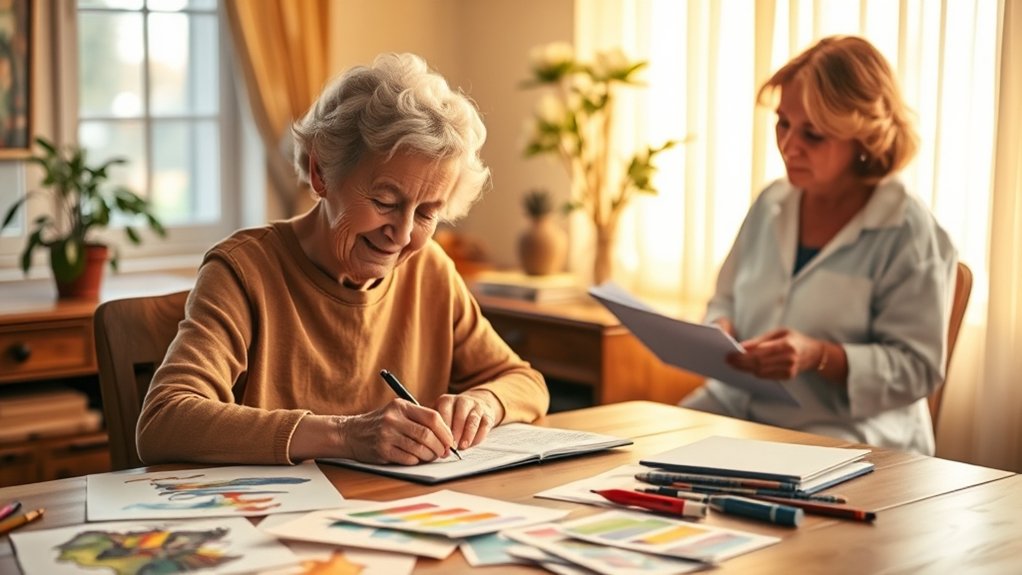
Storytelling and writing can be powerful tools for memory care residents, as they provide a means to express thoughts and preserve cherished memories. When you encourage residents to share their stories, it fosters a sense of identity and belonging.
You might introduce simple writing prompts or invite them to recount favorite life events, allowing their unique voices to shine through. This process can spark joy and stimulate cognitive function, as reminiscing often triggers forgotten details.
Additionally, you can create a safe space for sharing, where residents feel valued and heard. Incorporating storytelling into daily activities not only nurtures creativity but also deepens connections among residents and caregivers, enriching the overall experience and promoting emotional well-being. Furthermore, these activities align with the principles of holistic memory care services, ensuring that residents receive comprehensive support that addresses their emotional and cognitive needs.
Group Art Projects: Fostering Social Interaction and Community
Art projects can serve as a vibrant extension of the storytelling process, bringing residents together to create something meaningful while fostering social interaction and a sense of community.
When you engage memory care residents in group art projects, you’re not just facilitating creativity; you’re encouraging connections. As they collaborate, share ideas, and support each other, you’ll witness friendships blossom.
These projects can range from mural painting to crafting unique sculptures, allowing everyone to contribute their unique perspectives and talents. By celebrating their collective efforts, you help residents feel valued and included.
Art projects, from murals to sculptures, empower residents to share their unique talents, fostering a sense of value and inclusion.
Plus, these shared experiences can spark conversations, ignite laughter, and rekindle memories, making art a powerful tool for enhancing both individual and communal well-being in memory care settings. Additionally, person-centered care ensures that activities are tailored to the unique needs of each resident, further enriching their experience.
Frequently Asked Questions
What Types of Art Supplies Are Best for Memory Care Residents?
When choosing art supplies for memory care residents, opt for materials that are easy to handle and safe. Use thick, non-toxic markers, soft pastels, and watercolor paints, as they’re user-friendly and require minimal fine motor skills.
Consider providing tactile items like textured paper or modeling clay, which can stimulate creativity without overwhelming them.
Always keep their preferences in mind, creating an environment that encourages self-expression and joy through art.
How Can Caregivers Encourage Art Participation Among Residents?
To encourage art participation among residents, you can create a welcoming environment that sparks creativity.
Start by introducing simple, accessible materials that invite exploration. Engage residents by asking open-ended questions about their preferences and past experiences with art.
Offer gentle guidance and be patient; it’s essential to celebrate their efforts, no matter how small.
Group activities can also foster camaraderie, making art a shared and joyful experience for everyone involved.
Are There Any Age Restrictions for Art Activities?
There aren’t any strict age restrictions for art activities; creativity knows no bounds!
You can invite people of all ages to participate, allowing everyone to express themselves.
It’s important to tailor activities to suit different abilities and interests, ensuring everyone feels included.
By fostering a welcoming environment, you’ll encourage participation and enjoyment, no matter the age.
How Do We Assess the Effectiveness of Art Therapy?
To assess the effectiveness of art therapy, you can start by observing participants’ engagement and emotional responses during sessions.
You might use surveys or interviews to gather feedback from both participants and caregivers about changes in mood, communication, and social interaction.
Additionally, tracking progress over time through documented behavior or artistic expression can provide valuable insights.
Regularly reviewing these outcomes helps guarantee that the therapy meets the needs of those you’re serving.
Can Art Activities Be Adapted for Residents With Mobility Issues?
Absolutely, art activities can be adapted for residents with mobility issues.
You can provide materials that don’t require extensive movement, like painting with brushes attached to long handles or using adaptive tools.
Consider incorporating digital art on tablets, allowing for creativity without physical strain.